
Permaculture design is founded on the basis of 12 key design principles (See What is Permaculture for a full list). No matter where you are in life, what resources you have available, and what lifestyle you live, these 12 design principles provide a framework for solving problems, working with nature, and creating spaces that are resilient and adaptive. In this series, I will go through each of the 12 permaculture design principles, explain what they mean, and share some ideas about how they can be applied to someone beginning a permaculture journey while living in a rented apartment. Check in over the coming weeks to learn about each of the principles and gain new ways of thinking about the spaces you create, wherever you might live!
Permaculture Design Basics 9 – Favor Slow and Small Interventions
In my article on the first permaculture design principle, Observe and Reflect, I highlighted how our culture values quick, decisive action over prolonged periods of patience, learning, and appreciation for what already exists. I explained how taking the time to learn about the many overlapping and interacting layers of a system before trying to make changes can lead to more intelligent design. Now, with the 9th principle of permaculture design, we are encouraged to apply that same ethos of patience to our efforts when we do decide to intervene.
Lessons from Systems Thinking
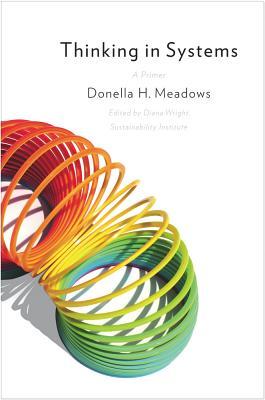
My girlfriend Maddie was recently assigned the book Thinking in Systems: A Primer by Donella Meadows as required reading for her OT Doctoral program. She suggested that the principles of systems thinking overlapped strongly with the principles of permaculture, and now having just finished listening to the book for myself, I have to agree. One thing that is made clear in both permaculture design and systems thinking is the fact that the behavior of systems is complex and often counterintuitive. It’s often easy to identify places where a small change can make a big difference in the way the system behaves, but it is not always intuitive in which direction that change should be made to achieve a desired outcome. This is true whether you’re working in a garden or trying to run a Fortune 500 company.
Poverty and the Surprising Effect of Changing the Rate of Economic Growth
For instance, Meadows gives the example of politicians focusing incessantly on economic growth as a leverage point with great potential to alleviate poverty. It turns out that systems modeling has confirmed that the rate of economic growth plays a huge role in determining poverty and the distribution of resources within a society, however these same models also show that slowing down, rather than speeding up, the rate of this growth leads to greater poverty mitigation. That’s because there are delays in the system as culture, technology, and communities work to adapt to accommodate new growth. Slow and steady growth allows the entire system to keep up, and so quality of life generally improves. However, rapid, unchecked, overzealous growth can actually cause issues like poverty to get worse, rather than better, as resources are consumed or degraded before balancing feedback loops like new legislation have the opportunity to come into effect. Thus, public policy designed to speed economic growth without consideration of other important factors has the potential to produce unintended negative consequences.
“Dancing” with Systems
It is the humility of realizing that we don’t have the capacity to omnisciently understand and control the many layers of systems that leads us to take small, incremental steps towards desired change in our environment. Rather than attempting to dominate and impose our will on nature, society, our household, or even our own behavior, we are encouraged to “dance” with a system, learn how it responds to our action, and modify future action to account for the reaction we noticed in the system. In the same way that you don’t start dancing with a new partner by trying to flip them in the air, you don’t start intervening in a system by trying to completely overhaul the processes that have organically developed before your arrival. This approach will prevent you from inadvertently destroying something critical that is impossible to replace before you understand the important role it plays.

Photo by Pixabay on Pexels.com
I like the analogy of dancing because in the same way that you can attempt more and more complex moves with a partner as you gain familiarity with one another’s styles, you can also gradually increase the scope and complexity of your interventions with a system as you understand it more deeply. However, it is important to keep in mind that responses to changes might not be linear. For instance, just because putting one inch of compost in your garden caused your harvest to increase by 10%, that does not mean that putting five inches of compost in your garden will cause your harvest to increase by 50%. In general, I would say that as the magnitude and scope of your interventions increase, the more and more likely you are to see surprising, counterintuitive behavior. Keep this in mind as you expand your interventions over time, and notice the fact that some unintended consequences might take months or even years to be fully felt.
When to Act Decisively
It’s important to note that slow, incremental interventions are generally the most appropriate approach to dealing with established, complex, relatively stable systems where self-regulating feedback loops have had the opportunity to develop. However, there are times where dramatic intervention may be necessary. This is more likely to be the case in a system that is very close to irreversible collapse or which has been stripped of its capacity to self-regulate.
An example of the former situation is an old growth forest with significant biodiversity. This system has many layers of interaction that serve to provide resiliency to the whole, and dramatic intervention here is more likely to upset the balance rather than improve it. An example of the latter situation, in contrast, might be a tract a barren land on the edge of the Amazon rainforest where unsustainable farming practices have led local farmers to “slash and burn” what was previously forest. In this situation, all of the organically evolved, natural systems of correction have already been stripped away, leaving topsoil and other important resources exposed to rapid degradation unless something is done quickly. Since the tract of land is obviously incapable of regenerating itself on a timescale that will be useful to humans, a more dramatic human intervention may be merited in order to restore the balance that previous human intervention had destroyed.
That said, even in such a dramatic example as this, the best path forward is probably to make the smallest intervention possible which will still stabilize the system long enough for other restorative systems to develop naturally. An overly emphatic re-forestation effort may just trade one problem for another, for example by inadvertently introducing invasive species.

Photo by Justus Menke on Pexels.com
Favoring Small Interventions in an Apartment
If you’re living in a rented space and looking to apply this permaculture design principle, you’re probably going to want to slow down the pace at which you try to change things in your life.
If you want to be healthier physically, avoid the temptation to start a 6-day-per-week gym plan, private yoga instruction, and a new paleo diet all at the same time. You’ll be pushing so many systems in dramatic new directions that you’re likely to undervalue and destabilize other important systems in your life, like your recreation and social time or your capacity to pursue education.
Your lifestyle represents a network of systems that have developed over the course of years to provide for your basic needs. There’s likely always room for some level of improvement, but you’re more likely to find that improvement by starting to go to the gym for an hour three days a week and trying that out for a month or two to see how it affects everything else. If you find that you were able to adapt the other parts of your life to accommodate this change and you’re looking for more of a physical challenge, then maybe increase your gym time to 4 or 5 days per week. Alternately, maybe you find that going to the gym 3 days per week cuts into your ability to get together with a close friend, so maybe you swap one of the gym days out for a 3-mile walk with your friend. Slower, more conscientious changes give you the opportunity to adapt to unexpected outcomes, and they will make your changes more sustainable and enjoyable in the long run.

Photo by Andrea Piacquadio on Pexels.com
Tying It All Together
Slow down, make small changes, observe the effects, and modify your approach based on what you observe. Avoid the temptation to command and control all aspects of a system you don’t fully understand. Keep in mind that some unintended consequences can take a long time to reveal themselves and that the impact of your interventions is likely to be non-linear. Incorporate these ideas into your life and your designs, and you’ll gain the ability to dance with complexity and appreciate the beauty it can contain.
 Bottom Up Permaculture
Very well explained, Tyler. Thank you.
LikeLike