Permaculture design is founded on the basis of 12 key design principles (See What is Permaculture for a full list). No matter where you are in life, what resources you have available, and what lifestyle you live, these 12 design principles provide a framework for solving problems, working with nature, and creating spaces that are resilient and adaptive. In this series, I will go through each of the 12 permaculture design principles, explain what they mean, and share some ideas about how they can be applied to someone beginning a permaculture journey while living in a rented apartment. Check in over the coming weeks to learn about each of the principles and gain new ways of thinking about the spaces you create, wherever you might live!
Permaculture Design Basics 3 – Obtain a Yield
“You can’t work on an empty stomach.” This simple statement highlights the fact that in order for permaculture design to be truly sustainable, it cannot just be an endless sink of time, energy, and resources. No matter how much water is saved, how much carbon is sequestered, or how much forest is preserved, ultimately our endeavors will burn out and fail in the long run if they do not offer us something in return.
Fortunately, nature can be incredibly abundant. More often than not, the limiting factor in the amount of benefit we can gain from a system is limited not by nature, but by our own creativity and knowledge. Obtaining a yield is the art of noticing where resources are produced in excess and finding ways to harvest that excess, either to sustain ourselves or to enhance other systems and produce an even greater yield down the line. This yield might come in the form of food, improved soil quality, entertainment, community building, beauty, cleaner water, or a financial payout, but whether the yield is tangible or intangible, it needs to be something that we value.

Photo by Pixabay on Pexels.com
Value In vs Value Out
Have you ever gotten excited about a project, jumped into it enthusiastically, and thrown money and hours of your time into it, only to have the project fade and die out a month or two later? This might look like getting really intrigued by houseplants, buying dozens of pots and exotic species, setting everything up around your house, only to find a few months later that watering that many plants every day has become a chore you resent. Inevitably, you’ll stop watering the plants consistently, they’ll die, and you’ll be back to where you started, minus a few hundred dollars.
The reason scenarios like this occur is because the amount of value required to maintain the systems is greater than the amount of value they provide. In other words, rather than providing a yield, they sap our strength and motivation away from other, potentially more productive work. In the case of the houseplants, the primary value we give up to maintain the system is our time: maybe it takes 30 minutes per day to water and prune all the plants properly. The primary value we extract from houseplants is beauty and the pride we take in caring for something that flourishes beneath our ministrations.
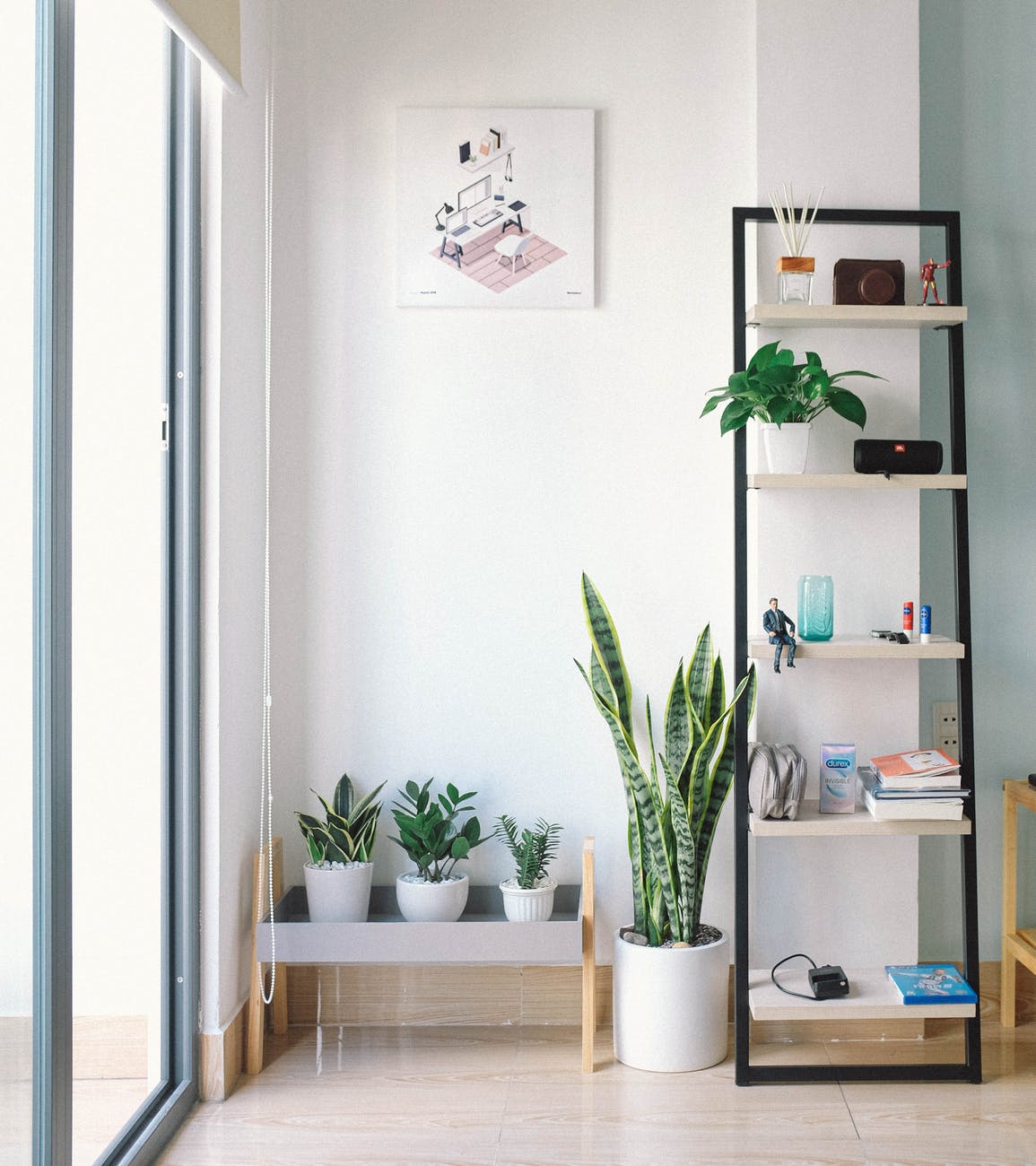
Photo by Huy Phan on Pexels.com
If this project is to be sustainable, we need to value the beauty of the plants more highly than we value the time required to take care of them. If this balance is achieved, then taking care of the plants will be “worth it” to us, and though it won’t be effortless, we are unlikely to regret having bought the plants. This balance of “value in versus value out” can be improved in two ways. We can either work to decrease the amount of energy required to maintain the system (maybe by investing in some watering bulbs so we only need to water the plants once per week rather than every day), or we can increase the value provided by the system (maybe by growing herbs that we can use in cooking, which are both beautiful and useful, rather than ornamental plants which are solely decorative). Whichever strategy we pursue, the goal is to get more “bang for our buck” until the system is providing the greatest possible yield.
Scale and Marginal Return
“If one is good, then ten must be better.” This simple logic is appealing at first glance, but it does not always hold true. For instance, eating one well prepared, delicious steak can provide us with energy, nutrition, and a delightful sensory experience. Eating nine more identical steaks in the same sitting is likely to leave even the most passionate carnivore feeling ill, bloated, tired, and disgusted with the thought of meat.
Anecdotes like this highlight a basic economic fact that helps us understand why more isn’t always better. The law of diminishing marginal utility explains that for any product or service, the additional value we gain from one more unit tends to decrease as the number of units consumed increases. In other words, if you’ve already eaten 10 steaks, the 11th steak is going to be far less appealing than that 1st steak you had at the beginning of your meal. At the same time, the cost of producing additional units tends to stay the same, at least when considering the scale of what a single person can make. The 11th steak costs just as much and takes just as much time to prepare as the first steak. The result is that as we produce more and more of a single item, we’re likely to find that the ratio of value in to value out deteriorates. This seems like common sense when put so bluntly, but it is easy to overlook when caught up in a more dynamic real world scenario.

Photo by Lukas on Pexels.com
In general, in the context of permaculture, you’re more likely to obtain a yield from a collection of smaller systems working together and supporting one another than you are from one giant system producing massive excess. In fact, the permaculture design principles of valuing slow, small interventions and utilizing diversity specifically tie into this idea. This is because, unless you’re running a large commercial operation where your primary goal is to sell off your excess to the community for a financial profit, you’re rapidly going to run up against diminishing returns while implementing large systems within a small site. Value will start to go to waste, and what was once pleasant and beautiful can become unkempt, overwhelming, and unpleasant. As you’re considering how to obtain a yield from permaculture projects in your own life, ponder the appropriate scale for your own circumstances, and if you’re not sure how big to go with something new, keep it small and grow it slowly while squeezing out every drop of utility.
Consider Opportunity Costs
Another economic principle that is useful while thinking about obtaining yields is the idea of opportunity cost. Simply put, opportunity cost is the value of the next best thing that we’re giving up in order to pursue a particular course of action. The opportunity cost of going for a jog might be the value you associate with using that time to take a nap, if taking a nap was the next most attractive option available to you for using that time. Every decision we make has an opportunity cost, whether it is large or small, because by choosing to do anything, we are also choosing not to do everything else.
I think it’s important to consider opportunity cost when you calculate whether a project or system will provide a yield for you. As a financial example, consider you have a degree in engineering and you’re choosing between two jobs. One job is with an engineering firm and pays $100,000 per year, and the other job is delivering pizzas for Papa John’s making $20,000 per year. Though pursuing either option will allow you to obtain a financial yield, there is a much higher financial opportunity cost associated with your choice to work with Papa John’s.
The same logic applies to choosing which projects to pursue in the context of permaculture design. Though the value of two competing alternatives might not be clearly measured in dollars and cents, it’s important to consider all of your options when deciding what to do and in what order. Weight your own enjoyment appropriately into the calculation, but also consider the long term benefits of having various systems established in your life before deciding where to start first. For instance, both learning to cook with whole foods and starting a community composting program are worthwhile permaculture endeavors that will allow you to obtain a yield (cooking whole foods makes you healthier and lowers your grocery bill while composting provides a soil amendment). However, if you start cooking healthier food at home first, you’re likely to have more food scraps to recycle and you’re likely to have more energy, focus, and clarity of mind to get the compost project rolling. Not to mention, cooking for a pot luck could be a great way to bring the community together to discuss the composting project. For these reasons, learning to cook might be a better starting point than composting because its yields are greater and can be re-invested into future projects.

Photo by KOUSHIK BALA on Pexels.com
Obtaining a Yield in an Apartment
If you’re just starting out with permaculture or you’re living in a relatively small space, there’s a good chance that the yields you’ll be obtaining through your projects will be measured in something other than money. It’s unlikely (though not impossible) that you’ll be raising enough herbs in your living room to provide for yourself and still have enough left over to sell for a profit. Instead, if, like myself, you find yourself in a situation like this, you might be better off to look for yields in terms of gaining new skills, connecting with people, providing entertainment and satisfaction, and a discovering a greater degree of self-reliance. All of these yields can be garnered from simple, low-cost systems, but they have the power to open new opportunities in your life and shift the way you think about the world.
Eliminating “Energetic Debts”
Start by taking an inventory of everything you’re already doing in your life (see “Observe and Reflect” for more details). Think about what each of these activities requires in terms of time, energy, and resources, and compare that with what you are receiving as a benefit of maintaining that system. If you find anything that jumps out as a massive drain on your life that doesn’t contribute much value back, begin by eliminating that activity and replacing it with something more productive.

Photo by Andrea Piacquadio on Pexels.com
This is the same idea as paying down your debts in personal finances. If you’re drowning in credit card debt and paying massive interest each month, it’s going to make a lot more sense to pay off that debt before you start trying to invest in the stock market. In the same way, if you’re engaging in any kind of impulsive and destructive behavior, be it substance abuse or unchecked spending, get the help you need to overcome these challenges. This may not seem directly related to permaculture and sustainability on first glance, but remember that permaculture is a way of looking at the world that encompasses your whole life. Any time you can strengthen the foundation of your own life and the connection you share with loved ones, you are empowering yourself to show up more fully and bring a greater pool of personal power to the table. This step is simple, but it can be incredibly challenging. Don’t skip over it just because it’s hard.
Investing in Education
If you’ve already paid off your energetic debts, so to speak, I believe the next most valuable place to start obtaining a yield in your life is education. This is because education, more so than any other resource in your life, has the potential to be re-invested over the course of decades and compound your ability to produce every other type of yield. Education can be harnessed to improve your capacity to make money, it can help you make smarter choices in terms of the food you eat, it can help you understand the world around you so that you can see hidden opportunities, and it can help you empower others on their own journeys.
Education might look like picking up a book on a topic you care about and spending some time to read it and take notes. It also might look like taking an internship at a farm that practices a model of agriculture you really admire. It might be finding and connecting with a mentor (see “Growing a Permaculture Network“), or it might be getting your hands dirty on your own patio and trying to grow a tomato bush for the first time in your life. Regardless of what it looks like or whatever other yields you obtain from in the process, I believe that no pursuit is a total waste if you learned something along the way. This is good news, because if you’re anything like me, chances are the first few times you try to start up a permaculture project independently you’re going to struggle to generate a substantial yield in terms of food or money. Plants will die, projects will fail, some money will be lost, but these are all necessary stepping stones that pay out huge dividends in terms of lessons learned.

Photo by Max Fischer on Pexels.com
Tying It All Together
Ultimately, obtaining a yield is about becoming more critical and discerning in where you spend your energy. All of us have places in our life where we impulsively dump resources, whether it’s time, money, or focus, in the search for short-sighted instant gratification. Start pruning back these detrimental activities and planting productive projects in their place, and you’ll find that your life gathers momentum which carries you through the rest of your permaculture journey!
 Bottom Up Permaculture