If you’ve ever tried to grow something outdoors, you’ve probably run into the challenge of having friendly neighborhood animals treating your well-tended garden like a free buffet. Even in the suburbs, rabbits, deer, groundhogs, and other plant predators can mow down a small bed of carrots, parsley, or lettuce overnight, making for a rather upsetting scene the next time you go out to water or harvest the fruits of your labor. For people growing on pieces of land that they own, the go-to solution is often to put up a permanent deer fence by sinking posts into the ground and building a six-foot or higher barrier all along the perimeter of their garden area. While this does create an area that deer can’t enter, there are many reasons this isn’t practical for all growers, particularly if you’re a renter. Whether you want to save money on building materials, you don’t have permission to build a fence, or simply because you don’t want a big tall barrier obstructing your view, below are a few ideas to help keep hungry animals away from your growing plants.
Natural Deer and Rabbit Repellent Sprays
If you’re looking for a quick and easy solution to keeping your plants secure, this might be the simplest option for you. Have you ever noticed how animals will eat certain plants but leave other plants alone? For instance, you might have had the tops munched off of your tomato plants while a rosemary bush nearby was completely untouched. The reason this happens is because deer and other animals are repelled by strong, foreign odors. In fact, the herbs and spices we find delicious often evolved their pungent flavors specifically to repel predators and pests. Fortunately for us, we can take advantage of animals’ natural aversion to strong scents to protect otherwise vulnerable plants by using natural sprays.

Depending on your situation, there are several options for sprays that might work for you. Personally, I have a garden that is about 150 feet from any of my outdoor living space, so I’ve had great success with a product from Lowe’s called Liquid Fence. This is a ready-made spray that primarily contains rotten egg whites, as well as a few oils like thyme and garlic that I’ve found to be particularly effective at repelling deer, rabbits, and groundhogs. It basically works by making the plants stink so badly that animals don’t want to eat them. I’ve found that applying the spray to my growing plants once or twice a month has completely stopped the deer from eating them, which is impressive when you consider the fact that a few months ago my tomato plants were regularly being nibbled down to stubs.
That said, the mixture is highly pungent to humans for a few hours after application, so this might not be a great option if you’re trying to keep animals away from the plants on your patio, since you’ll also be keeping all the people away from your patio as well. I also don’t know that I’d recommend spraying this repellent directly onto plants that you intend to eat. I think Liquid Fence is great for spraying onto tomato or cucumber vines where you’re not going to be eating the foliage anyway, but I would be hesitant about dousing my lettuce with it if I were going to be eating the greens anytime soon. I haven’t tried it personally, but I could imagine the residue of rotting egg whites might not be the tastiest addition to a salad.
If you want to avoid going to the store, there are also plenty of recipes online for DIY deer repellents. Better Homes and Gardens has this list, but there are plenty more if you just Google “DIY Deer Repellent.” I haven’t tried any of these myself, but they seem to range from an at-home recreation of the smelly egg white mixture to a more favorably scented blend made from vinegar and essential oils. I know my grandma also just mixes up a bunch of garlic powder and ground cayenne pepper with some soap and vinegar, and that apparently works well for her. If you have any other suggestions that you know work, let me know!
Floating Row Covers
For foliage that you intend to eat or that is growing somewhere you don’t want to smell funky, floating row covers can be a great way to keep four-legged intruders away from your food. Simply put, floating row covers are like putting a tiny fence over top of your crops so that animals can’t access them. Because they completely cover your plants, they don’t need to be too tall, and they can be installed or removed in under an hour.
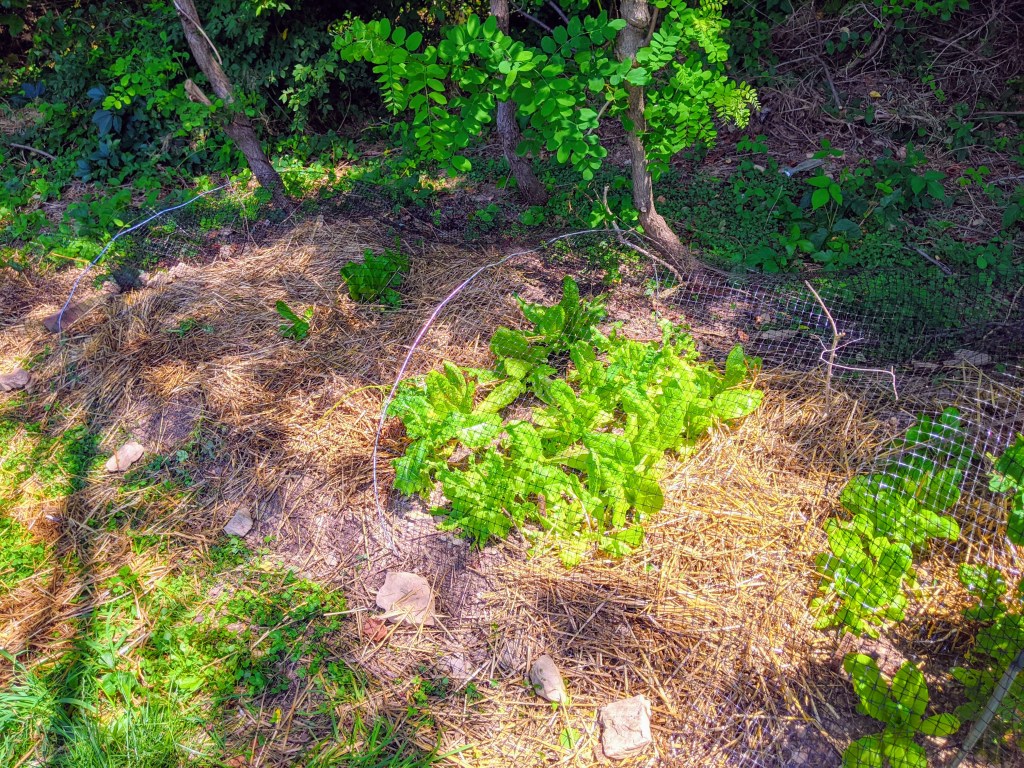
Though you could use a variety of materials, I constructed simple row covers for my home garden using 9-gauge utility wire, deer netting, and a few zip ties, again all from Lowe’s. While you’re at the store, it’s also worth investing in a good pair of wire cutters. From there, you simply need to cut the wire into 6-10 foot lengths (depending on the width of the rows you want to cover) and bend the wire into semi-circular hoops. The wire is stiff enough that you can push the ends into the ground and the hoops will remain standing, allowing you to zip tie the deer netting over the hoops to form a little tunnel. Just leave enough slack in the netting at the ends of the tunnels and where the netting meets the ground so that you can hold the edges down with either rocks or small sections of wire shaped into a “U” and pushed into the ground. This will prevent your netting from either blowing away or having small animals like rabbits work their way under the edge.
Other Strategies
Sprays and floating row covers are just a couple of tools in your arsenal to help defend against garden intruders. You can also plant flowers like marigolds, which have a strong scent and help to repel deer, along the edges of your gardens. In my experience, hungry enough deer will walk right past marigolds to eat what’s on the other side, but combining deer-resistant plants on the edge of your garden with a physical deterrent like floating row covers can provide a one-two punch that keep deer away.
Regardless of the strategy you choose, it’s worth noting that it’s much easier to repel predators before they develop a habit of coming to your garden for a snack. Once an animal knows that they can consistently find concentrated patches of tasty food in your garden, you’re going to be fighting an uphill battle to keep them from powering through your defenses. However, if you can keep them from ever discovering your tasty treats, then they’re not going to fight as hard to get to them. Come up with a strategy for keeping garden predators away before they become a problem, and you’ll be able to spend your time admiring the local wildlife without cursing them for eating your carrots!
 Bottom Up Permaculture